Being Salvadoran, Being Mixed, and What Science Can—and Can't—Tell Us About Identity
Jaime is an aspiring writer, recently published author, and scientist with a deep passion for storytelling and creative expression. With a background in science and data, he is actively pursuing certifications to further his science and data career. In addition to his scientific and data pursuits, he has a strong interest in literature, art, music, and a variety of academic fields. Currently working on a new book, Jaime is dedicated to advancing their writing while exploring the intersection of creativity and science. Jaime is always striving to continue to expand his knowledge and skills across diverse areas of interest.
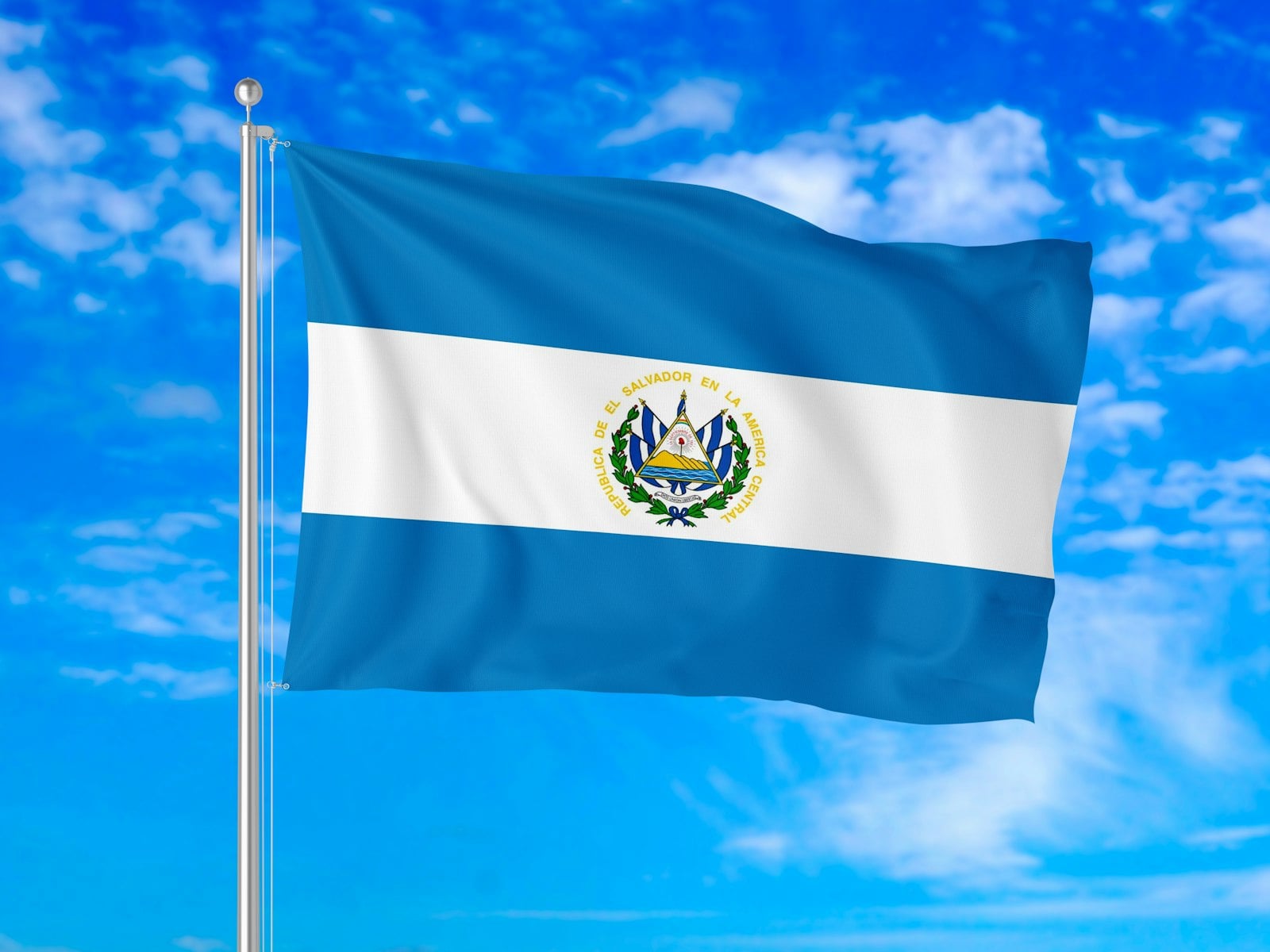
It's Hispanic Heritage Month.
And as someone who is Hispanic—more specifically, Salvadoran—I figured it's about damn time I talked about that part of myself.
I don't usually talk about my Hispanic heritage very much.
I talk about science.
I talk about society.
I talk about biology.
I talk about technology.
I talk about all sorts of weird things that catch my attention.
But my own heritage?
Not so much.
So let's change that.
I'm Salvadoran.
I'm also mixed. My family background includes Polish, Austrian, German, and French ancestry as well.
And being mixed has made me think a lot about something that science can describe in fascinating ways but can't completely define:
What exactly makes us who we are?
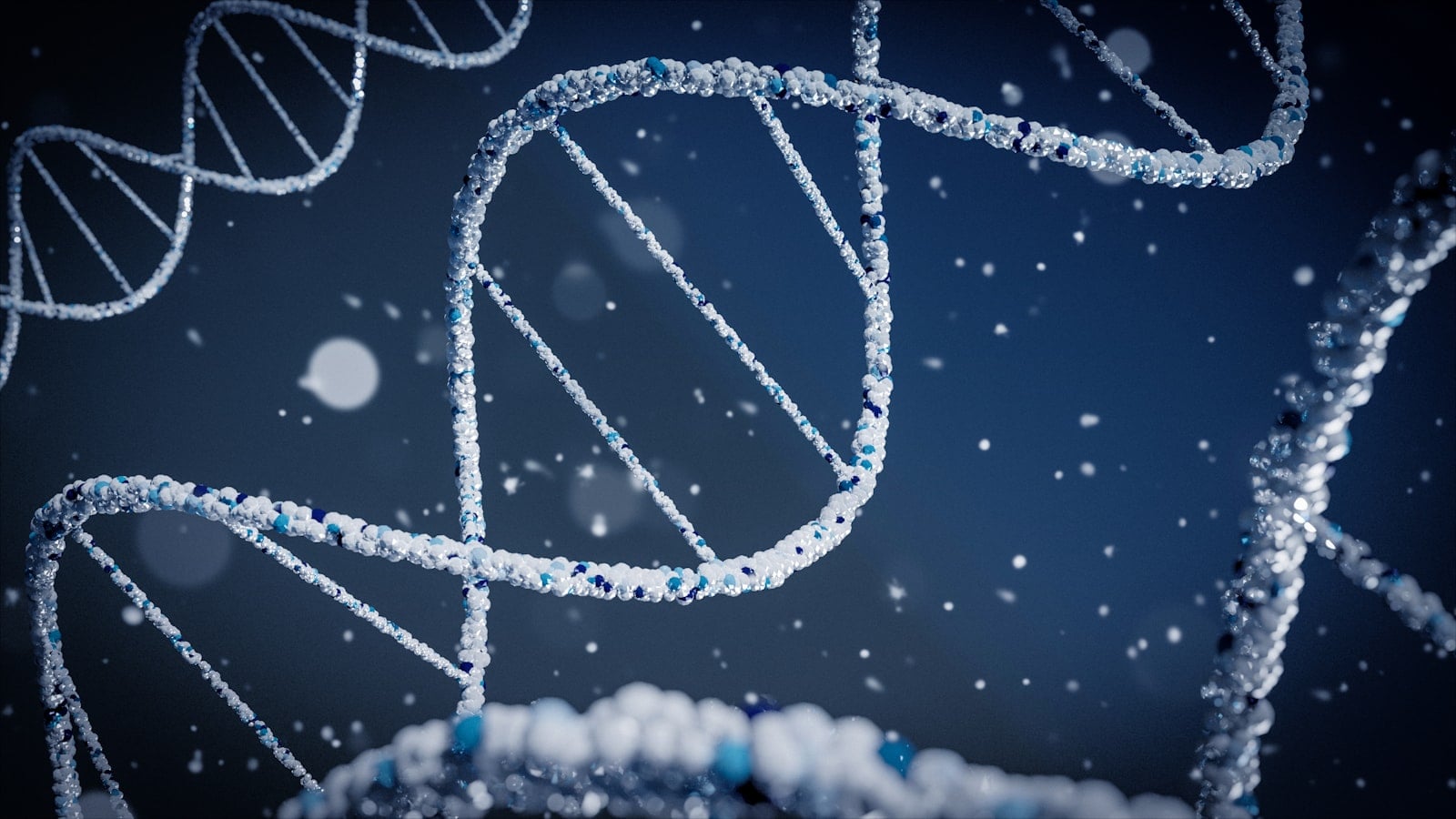
Genetically speaking, ancestry is one part of the answer.
But it isn't the whole answer.
Ancestry Isn't Identity
This is something I think gets misunderstood quite often.
Your ancestry can tell you things about where portions of your genetic heritage came from.
It can help us understand population history, migration, genetic variation, and relationships between populations.
But your DNA doesn't contain a little instruction manual saying:
"Congratulations. You are this kind of person."
Human identity is considerably more complicated than that.
Genes influence countless biological traits, but culture, family, environment, experiences, language, relationships, and society all contribute to how people understand themselves and how other people perceive them.
That's particularly relevant when talking about mixed people.
I can have Salvadoran ancestry and European ancestry at the same time.
Those aren't mutually exclusive categories.
Neither is my cultural identity determined entirely by a percentage on a DNA test.
I'm not 37% one personality and 21% another.
That's not how any of this works.
And yet we sometimes talk about ancestry as though it provides a complete explanation for someone's identity.
It doesn't.
Being Mixed Can Be Complicated
One thing I've become increasingly aware of is how much appearance influences people's assumptions.
I'm mixed.
Depending on who is looking at me, I may be perceived differently.
Sometimes I can benefit from being perceived as white.
That's something I would describe as a form of white-passing privilege.
And I think acknowledging that is important.
Because I haven't personally experienced a tremendous amount of racism directed at me because I'm Hispanic.
That's my experience.
It doesn't mean racism against Hispanic people isn't real.
It doesn't mean other Hispanic people haven't experienced considerably more discrimination than I have.
And it certainly doesn't mean my experience represents everyone.
Being mixed can put someone in an interesting position where they may benefit from certain social assumptions while still being subjected to prejudice because of another part of their identity.
I've experienced that personally.
The first time I can really remember experiencing prejudice directed at my Hispanic heritage was around 2020 or 2021.
I had a falling out with a friend, and after that falling out he briefly contacted me. During that interaction, he called me names relating to my Hispanic heritage.
I won't get into the larger circumstances.
That's not what this article is about.
But it was a reminder that identity isn't merely an abstract concept.
It can affect how other people treat you.
Then, earlier this year in 2026, I experienced something similar on a train while I was with my mom. A Black man who appeared to be experiencing some kind of episode directed comments at us, including comments relating to my Hispanic heritage.
It was an awful experience.
And it also reminded me of something important:
People don't have to belong to a particular racial group to participate in racial prejudice.
Human behavior is complicated.
Social behavior is complicated.
And reducing it to simplistic categories doesn't help us understand it.
The Biology of Difference Isn't the Same as the Social Meaning of Difference
This is where I think science can provide an important perspective.
Human beings are a single species.
We share overwhelmingly similar biology.
At the same time, human populations have accumulated genetic variation over thousands of generations because of factors including geographic separation, migration, natural selection, genetic drift, and other evolutionary processes.
That variation is real.
But the social categories we use aren't simple biological boxes.
"Race" and "ethnicity" don't map neatly onto discrete genetic packages.
Human genetic variation is complex and overlapping.
And culture adds another enormous layer.
Being Salvadoran isn't simply a biological condition.
It's connected to ancestry, family history, culture, nationality, traditions, experiences, and personal identification.
Someone can have Salvadoran ancestry without having the same cultural experiences as someone else who is Salvadoran.
Someone can be culturally connected to a community without having the same genetic ancestry as every other member of that community.
That's because biology and culture aren't interchangeable.
They're connected, but they're not the same thing.
And Then There's My Name
My pen name is Jaime David.
I've thought about this more in recent years because names can influence how people perceive us before they even meet us.
"Jaime" can be somewhat ambiguous depending on pronunciation. I pronounce mine "Jay-me."
"David" is considerably less ambiguous to many English speakers.
And there's something funny about that combination.
Because my name is somewhat ambiguous.
So am I.
I originally chose the name because it followed from my own naming history. The two names come from my middle name and confirmation name. I'm not going to say which is which.
At the time, I wasn't thinking about identity theory or social perception.
I just picked the name.
But looking back at it now, it almost feels fitting.
People can make assumptions based on names.
They can make assumptions based on appearance.
They can make assumptions based on accents.
They can make assumptions based on ancestry.
And those assumptions can affect how someone is treated.
That's not just an issue of biology.
It's an issue of psychology and sociology, too.
We're More Than Our Genomes
This is probably the biggest thing I want to emphasize.
Science is incredibly useful for understanding ourselves.
Genetics can tell us about inheritance.
Evolution can tell us about populations.
Anthropology can tell us about human history.
Neuroscience can help us understand the brain.
Psychology can help us understand behavior.
Sociology can help us understand groups and institutions.
But no single scientific field completely explains a human being.
I'm not just my genome.
I'm not just my ancestry.
I'm not just my phenotype.
I'm not just my culture.
I'm not just my experiences.
I'm the product of all of these interacting factors—and even that description probably doesn't capture everything.
That's one reason I've become more socially conscious over the years.
I've learned more about racism.
I've learned more about prejudice.
I've learned more about privilege.
I've learned more about how perception influences human behavior.
And I've learned that my own experience isn't necessarily somebody else's.
That's an important scientific principle, too.
Don't generalize beyond the evidence.
My experience is evidence of what happened to me.
It isn't evidence that every Hispanic person experiences the same thing.
It isn't evidence that racism doesn't exist.
It isn't evidence that mixed people universally have the same experience.
It's one person's experience.
Mine.
And that's enough.
What Being Mixed Has Taught Me
Being mixed has given me another reason to question simplistic categories.
Humans love categories.
Our brains naturally look for patterns.
Categories can be useful.
They help us organize information and make sense of an enormous amount of complexity.
But categories can also become oversimplifications.
People aren't data points.
People aren't percentages.
People aren't stereotypes.
And people certainly aren't reducible to a DNA ancestry report.
That's something I think is worth remembering during Hispanic Heritage Month.
My Salvadoran heritage is real.
My European heritage is real.
My experiences are real.
The privileges I've experienced are real.
The prejudice I've experienced is real.
And none of those things have to cancel each other out.
I can recognize that I've benefited from passing privilege while still recognizing that I'm Hispanic.
I can acknowledge that I've experienced prejudice without pretending I've experienced the same degree of discrimination as someone else.
I can recognize that my background is complicated without needing to turn that complexity into a neat percentage chart.
And I can keep learning.
That's probably the most scientific thing I can do.
Remain curious.
Question assumptions.
Look at evidence.
Recognize uncertainty.
Change my understanding when better information comes along.
And remember that one observation doesn't necessarily explain an entire system.
So, yeah.
I'm Salvadoran.
I'm Hispanic.
I'm mixed.
I'm also Polish, Austrian, German, and French.
I'm a creator who happens to write about science.
And during Hispanic Heritage Month, I'm finally taking some time to talk about the heritage that's been sitting quietly in the background of my identity for most of my life.
Because identity is complicated.
Human biology is complicated.
Human society is complicated.
And sometimes the best thing we can do is resist the temptation to make complicated things simpler than the evidence allows.
That's something science has taught me.
And it's something being mixed has taught me, too.