How I Think Ball Lightning Might Work: Plasma, Particles, and the Secret Life of the Air
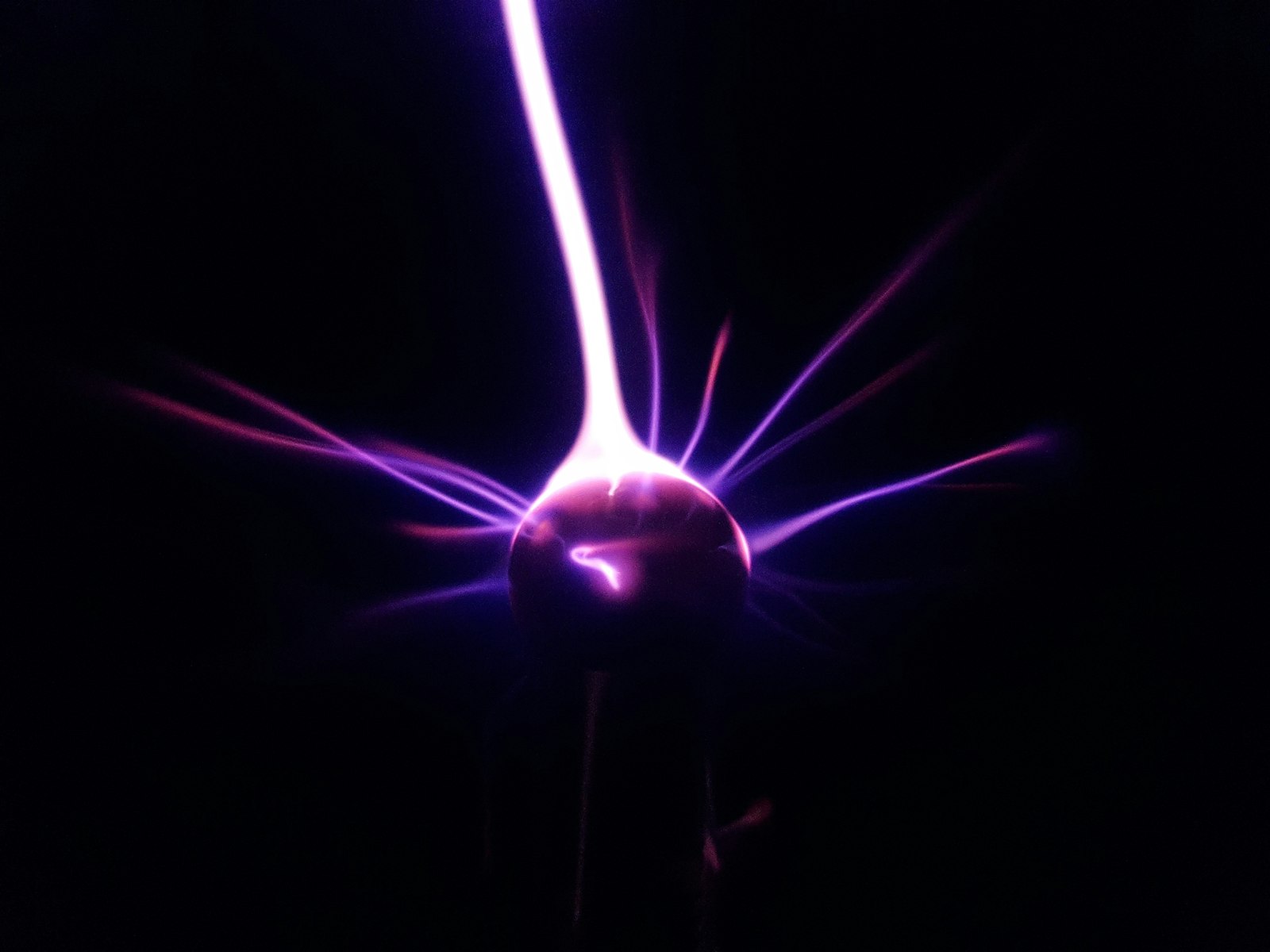
Ball lightning has always occupied that strange borderland between folklore and physics. It is reported as a glowing sphere, sometimes the size of a grapefruit, sometimes larger, drifting silently through the air during or after thunderstorms. Witnesses describe it moving through windows, hovering in rooms, sliding along power lines, or exploding with a sharp crack. For centuries it was dismissed as myth, exaggeration, or hallucination. Yet the persistence of similar reports across cultures and centuries suggests something real is happening. What fascinates me most is not just the mystery itself, but the possibility that the explanation could be hiding in something deceptively ordinary: the air around us. More specifically, the concentration of particles suspended in that air, perhaps even metal particles, interacting with lightning in a way we don’t fully appreciate.
To begin imagining how ball lightning might work, we have to understand lightning itself. A typical lightning bolt is not just a spark; it is a massive electrical discharge caused by charge separation in storm clouds. As ice particles collide inside a cumulonimbus cloud, they exchange electrons, creating regions of positive and negative charge. Eventually, the electrical potential difference becomes so large that the insulating air breaks down, forming a plasma channel. That plasma channel is intensely hot, hotter than the surface of the Sun for a brief moment. The lightning stroke equalizes charge in a violent, rapid process, leaving behind shock waves and electromagnetic radiation.
But what if, under certain atmospheric conditions, that energy does not simply dissipate? What if it becomes partially trapped, organized, or sustained in a localized pocket? My intuition is that ball lightning could arise when the air contains just the right concentration of suspended particles, especially conductive or semi-conductive ones. We already know that the atmosphere is not pure nitrogen and oxygen. It contains dust, aerosols, water droplets, soot, pollen, industrial pollutants, salt from oceans, and microscopic metallic particles from human activity. In urban and industrial areas especially, the air can contain measurable traces of iron, aluminum, copper, and other metals in particulate form.
Imagine a lightning strike occurring in air that contains an unusually high concentration of such particles. When lightning ionizes the surrounding air, it creates a plasma environment filled with free electrons and ions. If metallic particles are present, they may rapidly heat, vaporize, or ionize as well. Metal atoms are particularly good at emitting and absorbing electromagnetic radiation when excited. If a cloud of these particles becomes electrically charged and heated simultaneously, they could form a kind of glowing plasma-dust sphere.
Plasma physics offers a useful lens here. Plasma is sometimes called the fourth state of matter, consisting of ionized gas where electrons are stripped from atoms. In laboratories, plasma can form stable structures under certain conditions, including spherical configurations known as plasmoids. These structures can persist briefly because magnetic fields generated by moving charges confine the plasma. In other words, the plasma’s own electromagnetic activity can help contain it. If lightning creates a self-contained magnetic field around a region of ionized, particle-rich air, that could explain why ball lightning sometimes appears as a floating, glowing sphere.
The presence of metal particles could enhance this stability. Metallic dust can carry charge efficiently. If a swarm of microscopic particles becomes uniformly charged, electrostatic repulsion might push them outward, while magnetic forces generated by circulating currents could pull inward, creating a dynamic equilibrium. The glowing sphere would not be a solid object, but rather a constantly shifting interplay of charged particles, electromagnetic fields, and hot ionized gas.
There is also the possibility that metal particles could provide a slow-burning energy source. When metals oxidize rapidly, they release energy. In an oxygen-rich atmosphere following a lightning strike, vaporized metal could undergo intense oxidation, emitting light in the process. Aluminum powder, for instance, burns brilliantly when ignited. If lightning vaporizes metallic dust into a fine mist and ignites it, the resulting combustion could appear as a floating luminous orb. The combustion would not be explosive immediately; instead, it might proceed gradually, sustained by the oxygen in the surrounding air.
One of the most intriguing aspects of ball lightning reports is its movement. Witnesses describe it drifting slowly, sometimes against the wind, sometimes following conductive paths. If the sphere consists of charged particles, its motion could be influenced by local electric fields. Even after the main lightning discharge, residual electric fields often persist near the ground or around objects like power lines and buildings. A charged plasma-dust sphere might be gently guided along these invisible gradients. That could explain why ball lightning has been reported moving along metal fences, telephone wires, or even entering through windows.
Another feature often described is the ability of ball lightning to pass through glass without shattering it. This detail has always seemed almost supernatural. But if the phenomenon is not a solid object but a loosely bound plasma and particle cloud, perhaps it does not need to physically penetrate the glass in the way a solid would. Instead, the electromagnetic energy might induce ionization on the other side, effectively reforming the sphere beyond the barrier. Alternatively, if the orb is partly electromagnetic field structure rather than purely material, it might interact with materials in non-intuitive ways.
The concentration of particles in the air likely varies dramatically depending on environmental conditions. After volcanic eruptions, during dust storms, in polluted urban environments, or near industrial facilities, the density of aerosols can increase substantially. Thunderstorms passing through such particle-rich air might be more likely to produce unusual plasma phenomena. This could help explain why ball lightning is rare but not impossibly so. It may require a precise combination of humidity, particle concentration, electrical field strength, and atmospheric pressure.
Water vapor may also play a crucial role. Water droplets are polar molecules and can carry charge. In a humid thunderstorm environment, microscopic droplets can cluster around charged particles, creating complex composite structures. If metallic dust particles become coated in water and then ionized, the resulting plasma chemistry could be even more dynamic. The interplay between ionized water vapor and metal ions might sustain light emission longer than a simple spark would.
There have been laboratory attempts to recreate ball lightning. Some experiments using microwave radiation have produced glowing plasma spheres in silicon vapor, suggesting that vaporized material can indeed form stable luminous balls under electromagnetic excitation. In one scenario, a lightning strike hitting soil could vaporize silica and other minerals, creating a glowing silicon plasma ball. If we expand that idea to include atmospheric metal particles, we can imagine a similar mechanism occurring in the air itself rather than from the ground.
The electromagnetic environment during a lightning storm is chaotic and intense. Radio frequency radiation, strong electric fields, and rapidly changing magnetic fields all coexist. If a pocket of particle-rich air finds itself in the right place at the right time, these fields could pump energy into it, sustaining ionization longer than would normally be possible. The sphere might act like a resonant cavity, trapping electromagnetic energy internally. Metallic particles could enhance this effect by reflecting and scattering electromagnetic waves within the sphere.
Another angle to consider is charge clustering. Charged particles in the atmosphere do not distribute randomly when strong electric fields are present. They can cluster and form filaments or sheets. If a spherical clustering occurs due to symmetry in the field lines, the result could be a glowing orb. The sphere shape is significant because it minimizes surface energy and distributes internal forces evenly. Nature often defaults to spherical shapes when forces are balanced from all directions.
What about the explosive endings often reported? If the sphere gradually loses stability as charges dissipate or fuel is consumed, it might collapse suddenly. A rapid recombination of ions and electrons could release energy in a burst, producing the bang witnesses describe. Alternatively, if combustible metal vapor is involved, once the concentration reaches a critical point, it could detonate.
I find it compelling that ball lightning is often described in environments where metal infrastructure is nearby: ships, airplanes, power lines, railways. While this may partly reflect where people are present to observe it, it could also hint at the role of metallic material in the environment. Lightning interacting with metal structures can vaporize tiny amounts of material, injecting additional particles into the air. A ship’s mast or a power transformer struck by lightning could create a localized cloud of metal vapor and ions.
The rarity of ball lightning might come down to thresholds. Perhaps below a certain particle concentration, the energy disperses too quickly. Above a certain level, it becomes explosive rather than stable. Only within a narrow window does a glowing sphere persist for several seconds. That would explain why it is neither common nor purely mythical.
From a broader perspective, this idea highlights how little we truly know about the microphysics of storms. The air is not empty space. It is a dynamic mixture of gases, particles, droplets, and fields. When lightning strikes, it does not simply illuminate the sky; it reorganizes matter at the microscopic level. If ball lightning exists as a stable plasma-dust-electromagnetic structure, it would be a vivid demonstration of the complexity hidden in something as familiar as a thunderstorm.
In the end, my speculation centers on a simple but powerful premise: concentration matters. The concentration of particles in the air, particularly conductive or metallic ones, may determine whether lightning’s energy dissipates instantly or briefly crystallizes into something luminous and spherical. Metal particles could provide conductivity, radiative properties, chemical fuel, and electromagnetic interaction all at once. Combined with ionized air and residual electric fields, they might form a transient, glowing equilibrium we call ball lightning.
Of course, this remains a hypothesis. Ball lightning is notoriously difficult to study because it is unpredictable and short-lived. Yet the intersection of plasma physics, atmospheric chemistry, and aerosol science offers fertile ground for exploration. If future research measures particle concentrations during thunderstorms and correlates them with unusual luminous phenomena, we may get closer to understanding this elusive glow.
Until then, I like to imagine that every thunderstorm carries within it the potential for something extraordinary. Not magic, not myth, but physics operating at the edge of our comprehension. A flash of lightning, a cloud of microscopic particles, a swirl of electric and magnetic fields, and for a few suspended seconds, the air itself becomes a luminous sphere.
About the author
Jaime is an aspiring writer, recently published author, and scientist with a deep passion for storytelling and creative expression. With a background in science and data, he is actively pursuing certifications to further his science and data career. In addition to his scientific and data pursuits, he has a strong interest in literature, art, music, and a variety of academic fields. Currently working on a new book, Jaime is dedicated to advancing their writing while exploring the intersection of creativity and science. Jaime is always striving to continue to expand his knowledge and skills across diverse areas of interest.
Comments
Join the discussionNo comments yet. Be the first to comment.